
For many people living with disabilities, assistance dogs play a vital role in providing independence, confidence and practical support. More than 7,000 people across the UK are currently partnered with assistance dogs trained by organisations that are members of Assistance Dogs UK. These highly trained dogs enable their owners to visit attractions, stay in accommodation, enjoy days out, dine in restaurants and experience everything a destination has to offer.
While most tourism businesses want to provide an inclusive welcome, questions can sometimes arise around assistance dogs and the responsibilities of service providers. Understanding the guidance can help businesses feel confident in supporting all visitors and ensuring everyone enjoys a positive experience.
The Equality Act 2010 gives disabled people important rights when accessing services, facilities and attractions. The good news is that welcoming visitors with assistance dogs is usually simple and straightforward, and small adjustments can make a significant difference to someone's experience.
To help tourism businesses better understand assistance dogs and their legal responsibilities, we've brought together guidance from VisitEngland's Pink Book, Assistance Dogs UK and the Equality and Human Rights Commission. In this blog, we'll answer some of the most common questions businesses ask and share practical advice on creating a welcoming and inclusive environment for all.
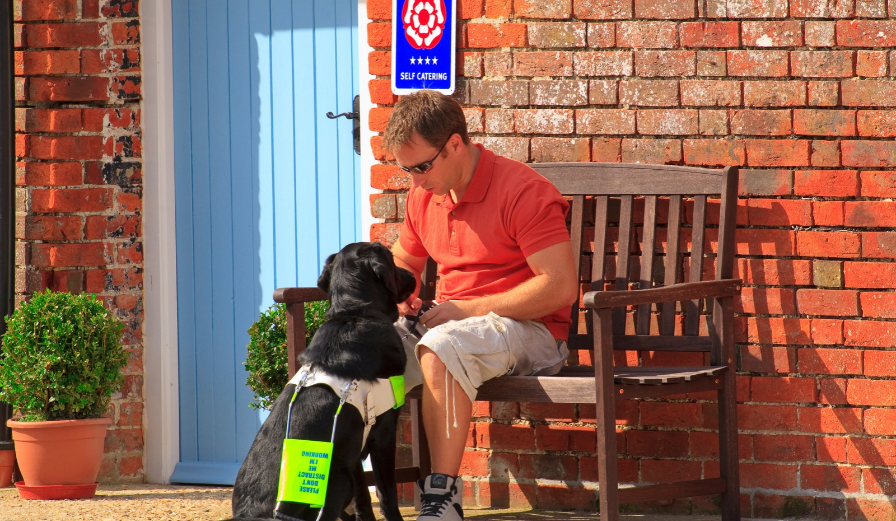
Frequently Asked Questions
Below, we've answered some of the most common query's tourism and hospitality businesses raise about assistance dogs.
1. Do we have to allow assistance dogs into our business?
Yes, in most circumstances. Under the Equality Act 2010, it would generally be unlawful to refuse access to a disabled person because they are accompanied by an assistance dog. This applies to accommodation providers, attractions, restaurants, cafés, shops, transport providers, and other customer-facing businesses.
2. What actually counts as an assistance dog?
An assistance dog is not a pet. It is a dog that supports a disabled person by carrying out tasks related to their disability or helping them maintain independence. Assistance dogs support people with a wide range of disabilities, including visual impairments, hearing loss, mobility impairments, epilepsy, diabetes and other conditions.
3. Does an assistance dog have to wear a jacket, harness, or special vest?
No. Whilst many assistance dogs wear identifying jackets or harnesses, there is no legal requirement for them to do so. A dog should not be refused access simply because it is not wearing branded equipment.
4. Can we ask to see ID or certification?
Many assistance dog users carry identification, but there is no legal requirement for them to carry an ID card or booklet. Businesses should not assume a dog is not an assistance dog simply because the customer cannot produce documentation.
5. What if we operate a 'no dogs' policy?
A "no dogs" policy does not override the rights of disabled people who use assistance dogs. Assistance dogs are not treated in the same way as pets and businesses are expected to make reasonable adjustments to accommodate them.
6. What about food hygiene regulations? Aren't dogs banned where food is served?
No. Food hygiene rules do not prevent assistance dogs from entering public dining areas in restaurants, cafés, pubs, hotels or visitor attractions. Assistance dogs are commonly admitted to food-service areas where customers are present. (The restrictions relate to food preparation areas, not customer spaces.) Guidance from the Equality and Human Rights Commission makes clear that businesses should welcome assistance dogs.
7. What if other customers are afraid of dogs or have allergies?
The presence of another customer with an allergy or fear of dogs does not automatically justify refusing access to an assistance dog. In most situations, both customers can be accommodated through practical measures such as seating them separately or offering alternative seating arrangements.
8. What if the dog causes damage or behaves badly?
Assistance dogs are typically highly trained and well-behaved. However, businesses can address genuine behavioural issues in the same way they would manage any health and safety concern. Decisions should be based on the dog's actual behaviour, not assumptions or stereotypes.
9. Are emotional support animals (ESAs) the same as assistance dogs?
Not necessarily. The Equality Act 2010 does not specifically define emotional support animals. Whether access should be granted will depend on the circumstances and the reasonable adjustments required for the individual disabled person.
10. Are owner-trained assistance dogs recognised?
Yes. Assistance dogs may be trained by an organisation or by their owner. There is no legal requirement that a dog must be trained by a specific charity or organisation before it can accompany a disabled person.
Creating an accessible and welcoming visitor experience benefits everyone. By understanding the role assistance dogs play and ensuring staff feel confident supporting their users, tourism businesses can help make Worcestershire a destination that is welcoming and inclusive for all.

Further information and resources
This article draws on guidance from the following organisations. We encourage businesses to explore these resources and share them with customer-facing staff to help build confidence in welcoming visitors with assistance dogs
- VisitEngland Pink Book: Practical guidance on accessibility and legal responsibilities for tourism businesses. Equality Law: Accessibility Regulations UK | VisitBritain.org
- Assistance Dogs UK: Information about assistance dogs, access rights, and resources for service providers. ADUK Quick Guides - Assistance Dogs UK
- Equality and Human Rights Commission: Guidance on assistance dogs and business obligations under the Equality Act 2010. Assistance dogs: a guide for all businesses| EHRC. assistance-dogs-a-guide-for-all-businesses_0.pdf
- Business Disability Forum: Resources, advice and best practice to help organisations become more disability inclusive and accessible. 'Open to all' disability inclusion guidance | Business Disability Forum